Chalbi Desert & Lake Turkana expeditions
Northern Kenya attractions are some of the least visited destinations compared to the famous Maasai Mara and other southern parks.
But what is really up there in the north?
Marsabit town and Marsabit national park
Marsabit town, situated 530kms northeast of Nairobi is the Headquarter of the largest county in Kenya in terms of landmass sitting at an elevation of 1400mtrs above sea level, Marsabit town can offer deceivingly cooler weather to first-time visitors. 10kms out of town and the heat is as real as the rest of the county. The town has had a major economic boost by getting a new road stretching from Isiolo to Moyale. This has opened up the county for tourism and in general trade and commerce. The town hosts Marsabit national park which is home to some of the largest elephants in Kenya. It is famed for being home to Ahmed the famous elephant whose tasked weighed cool 74kgs and was awarded state protection from the then head of state.
Of calderas, dunes, oasis, endless hills, and valleys…
.. all these physical features learned in school can be found in the Northern circuit. Basin shaped depressions or otherwise known as caldera are numerous and a visit to one of these reminds you of your geography classes. Some craters are so windy that skinny people might just be blown away by the circling winds from the craters. Desert dunes is a must-see for travelers. These are beautifully shaped sand deposits collected over time through the gushing winds of the open desert plains and are very ideal for play. These dunes adorn most parts of North Horr and Maikona.
Kalacha oasis….just like in the biblical tales, in every desert there is an oasis of hope…the oasis of maikona and kalacha are not just oasis of hope but life-giving resource both to the local populace and their livestock. The natural streams of pure natural water ooze from patchy forests of desert doum palms and acacia trees providing a much needed cooling effect and quenching appetite.
Of bird life….The north is a bird watchers haven. Rare species of birds are found all around the northern circuit including the migratory species such as the Abyssinian rollers.
Uri Hills, Mathew Ranges, Mt. Kulal, Ngurunit Hills. These mountains and hills dot the arid plains providing a blend of natural features which is very pleasing to look at every stage of the journey. The cascading mountains of Ngurunit give life a refreshing taste with water slides under the towering range of the mountains.
Chalbi desert: 90Kms west of Marsabit town starts the vast sandy and dusty desert plains of Chalbi. Chalbi desert is a dry lake stretching 92kms from Maikona covering parts of kalacha and North Horr. The desert has endless tales of lost adventurers who made a wrong turn and got lost for days and days. Deep inside the desert, there lies numerous sand dunes and vast deposits of salt which form during flooding. Chalbi desert floods from time to time and after the floods, the desert can take up to 90 days to dry again and often, off-roading during such times can land you a permanent stop for days
Loiyangalani and the wonder lake..
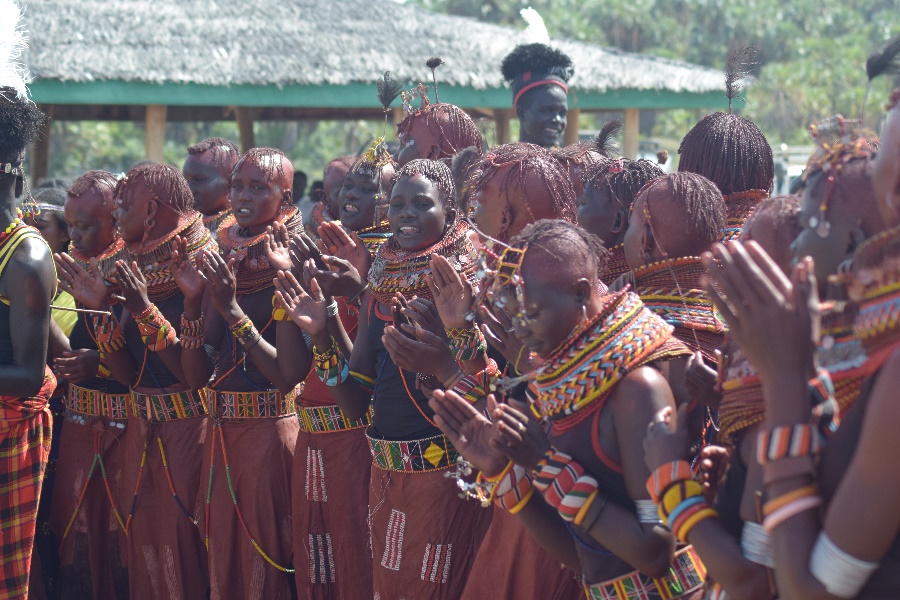
Loiyangalani sits on the southeastern shore of Lake Turkana and is also like a “resort city” of Lake Turkana. At times life here can be a little lackluster when foreign travelers are few however the town turns busy on several occasions such as the annual cultural festivals which bring together exhibitions from communities in the vast county. This is home to the smallest tribe in Kenya known as the El molo ..El molo are indigenous inhabitants of Lake Turkana and hitherto still live on the little islands on the eastern parts of the lake. Their main economic activity is fishing and extraction and manufacturing of cod liver oil from codfish. Cod liver oil is a vital health immune ingredient providing omega 3 and vitamins. The El molo people however are slowly losing their indigenous language due to intermarriage from Samburu and Turkana community
Further north, the barren lake shores stretch 290kms towards sibiloi national park and ending at Omo River on the Ethiopian border